
”
The more uncertain operating environment gets, the more innovation matters
Tero-Seppo Tuomela
Tero-Seppo Tuomela, Senior Vice President at Elomatic, has spent over two decades at the company. Today, his primary focus is making innovation happen systematically, not by chance. In a time of compounding disruptions, he sees systematic innovation management more urgent than ever.
What has kept you at Elomatic for over 20 years?
I started as Business Controller, became CFO in 2006, and held that role for 17 years. Three years ago, I moved into a new executive role focused on business development. The people here are forward-looking, and the work keeps evolving. New challenges appear, and it never gets stale.
What are the most important things on your desk right now?
The first is building a culture of systematic innovation. Elomatic was originally founded to carry out an R&D project for developing environmentally friendly asphalt machines. That pioneering spirit has never left us. People here are open to new ideas and willing to experiment. But as the company has grown, development work happens in many places at once.
We need more structure – to work efficiently, avoid duplication, and focus on what makes the most business sense. When real gems emerge, we need to move fast.
We need more structure – to work efficiently, avoid duplication, and focus on what makes the most business sense.
How do you define innovation at Elomatic?
Our innovation culture refers to the mindset of our people. We want everybody to keep doing things a little better rather than saying “this is how we’ve always done it.” But to call something innovation, it has to carry significant commercial value: new products, services, or business models. Sometimes notable financial value can be created via innovative ways of working, like using AI to achieve significant improvements in efficiency.
How do geopolitical and climate pressures change how innovation should be managed right now?
Uncertainty doesn’t necessarily change how we manage innovation, but it makes innovation and the willingness to evolve even more important. When you’re in that mindset, you’re better prepared to adapt as conditions shift. You become more agile. That’s exactly why building a systematic innovation culture feels more urgent than ever.
How does building innovation culture connect to Elomatic’s long-term strategy?
We use a 60-30-10 framework to keep our priorities clear. The 60 is our current core business: daily customer work that delivers steady profitability. The 30 covers areas where we have special expertise and want to grow, each managed differently. The 10 is about staying alert to what might emerge beyond our traditional operations: potential spin-offs and entirely new opportunities.
How do you make it work in practice – without sacrificing on efficiency?
The customer perspective is central, and it’s not in conflict with efficiency. We always highlight opportunities for improvement to our customers as part of our projects. But we don’t want to get stuck in the 60, or even the 30. Systematic innovation culture is what keeps the 10 alive, so that when something unexpected emerges, we’re ready to move on it.
What critical capabilities are you building to support innovation?
We need dedicated people to drive innovation forward, support leadership, and facilitate innovation development. On the one hand, this means ensuring that we have sufficient management resources to guide and support the process. On the other hand, we have found volunteer employees who are eager to act as facilitators – our innovation change agents. So building the organizational capability comes first.
This year, we’re also planning company-wide events where the entire staff can contribute. We want to tap into expertise across the entire organization.
How do you protect customer trust while developing new growth for Elomatic?
We have a clear principle: we don’t compete with our customers. Our primary approach is to innovate together with them in ways that benefit their business. That creates growth for us too: we get to consult and design alongside them.
Of course, if an innovation emerges that doesn’t directly relate to a customer’s business, we can develop it independently. But the starting point should always be the customer perspective: a real problem with business relevance that delivers cost savings or added value.
What tools have you adopted to lower the barrier to participating in innovation?
Different parts of the organization have had their own practices. Now we’re unifying them and making them accessible to everyone. One example is our idea box, which we’re making more visible. We want to separate everyday improvement ideas from viable innovations that could become new business models or products.
We’ve also started a development project, which aims to create a “development project aquarium”: a transparent view where everyone can follow ongoing projects and their progress.
How do you recognize and reward work that leads to innovation?
We have several mechanisms in place: invention disclosures, a suggestion reward system, and spontaneous bonuses for recognized contributions. The key now is making them more visible.
How do you leverage external partners?
External partnerships are a growing priority. Last year, we established an Innovation Challenge program with the University of British Columbia, where students propose ideas within a set framework. This year we’re launching three research projects exploring our Float Foundation technology outside the traditional offshore sector. It’s Elomatic’s patented solution mostly known for installing offshore wind turbines without specialized lift vessels, but the underlying innovation has potential well beyond that.
Also, in Finland we are cooperating with a number of universities around the country. It goes without saying that innovations are at the core of research and development. Universities of applied sciences have also been eager to help in arranging innovation events, like hackathon-style competitions.
We’ve also signed a collaboration agreement with A’Pelago and joined their Blue Economy community as a partner, connecting companies and sponsors to advance ocean wellbeing. A key element is a startup accelerator program with around 10–15 startups joining each year.
Can you share a simple, low-tech solution that surprised you with how well it worked?
I think Elogrid is an excellent example. It’s our patented steel grid solution installed at the end of a ship’s thruster tunnel. The basic idea and the physical product look pretty simple, but there’s a notable amount of highly advanced CFD optimization behind the product. Elogrid innovation significantly improves maneuverability, reduces noise and vibration, and lowers carbon emissions via increased thrust and decreased fuel consumption.
How have you changed your own approach to make innovation part of everyday work?
It starts with my own way of thinking. I keep asking: how do we bring added value, come up with ideas customers haven’t thought of themselves, and help them benefit? Customer value creation has to run through the entire management system. The goal is for innovation to show up in every customer conversation, every design decision, every team meeting.
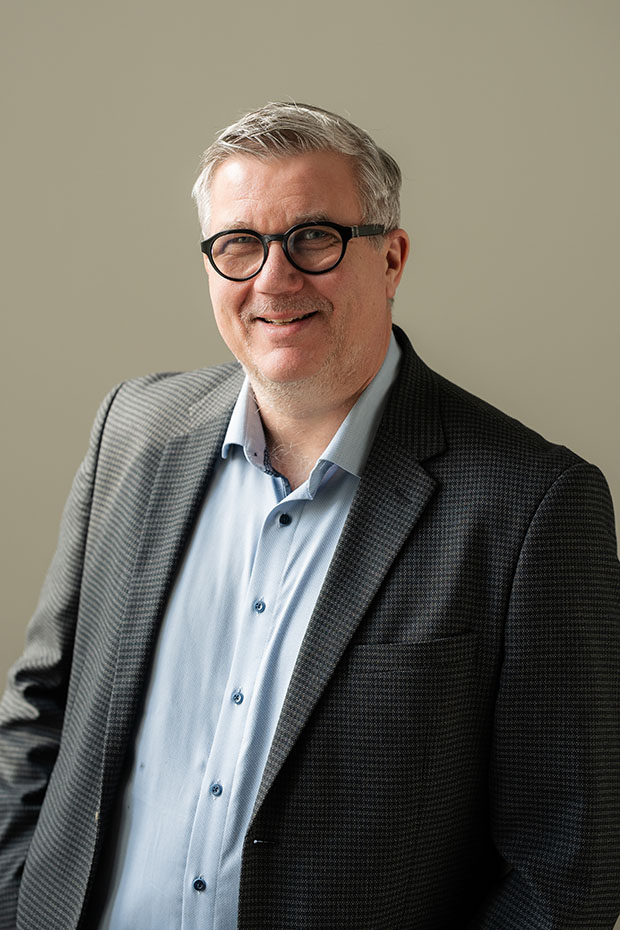
Tero-Seppo Tuomela
Age: 55
Lives in: Raisio, Finland
Education: Lic.Sc. in Accounting and Finance
Employment history: 25 years at Elomatic, primarily as CFO and for the past three years leading new business development. Prior to Elomatic: academic researcher, trainer, and consultant.
Hobbies: Head coach of RaiFu U12 boys’ soccer team, disc golf
Want to know more?
Industrializing biomaterials: Five critical transitions in scale-up
The biomaterials sector has rarely been better positioned. Despite economic recession, investment plans flourish, policy frameworks are strengthening, and the pipeline of promising technologies has never been deeper. Still, moving toward a commercial facility remains difficult, and the challenges are often unexpected. In this article, biomaterials experts Tuija Vartia and Jarno Peltonen discuss why biomaterial innovations often fail to scale from laboratory to industrial production.
Elomatic and JAMK are training engineers for future needs through systematic cooperation
The goal of the collaboration between Elomatic and JAMK University of Applied Sciences is to support engineering students from the beginning to the end of their studies, to familiarize them with working life, and to help Elomatic meet its staffing needs by recruiting newly graduated, skilled engineers. The systematic model integrates internships, theses, and training programs, while also opening concrete career pathways for young people.
Join the Newsletter!
Subscribe to the newsletter and receive the latest updates from Top Engineer magazine – featuring expert interviews, inspiring case studies, and actionable insights from our top professionals.
As a subscriber, you’ll enjoy:
- Innovative Ideas: Stay inspired by the latest breakthroughs and creative solutions in engineering.
- Sustainability Simplified: Discover practical strategies to accelerate the green transition.
- Cross-Industry Insights: Learn from success stories and best practices across the tech world.
Delivered six times a year, our newsletter is your key to staying informed, inspired, and ahead in the fast-evolving world of engineering.
Don’t miss out – sign up today!