
From biomass to industrial raw material
Estimated reading time: 6 minutes
CH-Bioforce scales its technology to industrial scale
Oat hulls and other biomass materials become pure biopolymers through CH-Bioforce’s fiber fragmentation technology. These biopolymers serve as ingredients in products like microplastic-free cosmetics, adhesives, and dietary fibers.
Wood, wheat and rice straw, oat and cocoa bean hulls, bagasse – almost any organic, biological material can soon be used more efficiently as a raw material for manufacturing. CH-Bioforce, based in the Raisio industrial park in Finland, has patented Bioforsense technology that can fractionate biomass into its main constituents, and thus produce sustainable biopolymers – the first in the world without burning biomass. This makes biomass easier to recycle, refine, and use efficiently.
The technology is now being scaled to the industrial level for commercial use. Engineering and consulting firm Elomatic is supporting CH-Bioforce in the process.
Biopolymers can replace synthetic polymers made from non-renewable raw materials, such as plastic.
Biopolymers replace fossil-based plastics
Biopolymers can replace synthetic polymers made from non-renewable raw materials, such as plastic. Shifting to renewable, bio-based raw materials is essential from a long-term perspective, since fossil-based raw materials are finite natural resources, and their use generates significant CO2 emissions.
Cellulose fiber is one example: it consists of a biopolymer called cellulose. Traditional pulp manufacturing separates only cellulose fibers from wood, and the remaining fraction is used for instance in energy production. CH-Bioforce’s Bioforsense technology can separate not just cellulose fibers but also biopolymers like hemicellulose and lignin from wood or other biomass. The process produces zero emissions, as it runs on electricity.
Over 15 years of development
CH-Bioforce’s Bioforsense technology has been in development for over 15 years. “The domestic forest industry was struggling. We knew its value would grow if biomass could be used more efficiently, producing something beyond paper and cardboard,” says Sebastian von Schoultz, who leads financing and scaling at CH-Bioforce.
He had worked with fiber fragmentation technology before. von Schoultz studied chemical engineering at Åbo Akademi in the late 1990s. Together with former classmates Nicholas Lax and Lari Vähäsalo, he began exploring how to make the technology commercially viable. Today, Lax leads technology development at CH-Bioforce, and Vähäsalo heads research and product development.
From garage laboratory to industrial scale
The trio set up a laboratory in von Schoultz’s garage, where Lax developed and built reactors. The work resulted in a technology that was eventually patented. When Finnish chemistry company Chemec became CH-Bioforce’s investor in 2016, they decided to start planning a small-scale pilot plant. At the same time, operations moved to the Raisio industrial park.
“The idea was to test the technology at the pilot plant: to try producing biopolymers. That way we could confirm the scaled technology works before investing in a larger plant,” says Heikki Pirilä, who leads sustainability-related projects at Elomatic.
The first pilot was completed in late 2019. Now an expansion of the pilot is underway – a plant roughly 10 times larger than the first. It is scheduled for completion in September 2026. After that, scaling the technology to full industrial production begins.
Scaling can call for creative solutions
Scaling technology from laboratory to pilot and then to industrial scale is not always straightforward. If a particular piece of equipment cannot be scaled up sufficiently, the plant may need multiple smaller units or alternatively explore other process solutions, Pirilä explains.
He has been involved in many scaling projects and knows what equipment is available on the market and how to make the best use of it in each project. CH-Bioforce’s pilot plant has sourced some equipment secondhand, as the schedule is tight and delivery times can sometimes be long. This also significantly affects the investment costs.
“If used equipment doesn’t fit the plant as-is, it can be customized. Even with this option, the savings are often significant,” Pirilä says.
A multidisciplinary team supports scaling
Scaling requires a wide range of expertise. Around twenty Elomatic specialists have been involved in CH-Bioforce’s scaling project, including professionals in project management, process modeling, execution supervision, as well as various design disciplines such as architecture, structural engineering, HVAC, process, equipment, piping, process electrification, instrumentation, and process automation.
In addition to skilled professionals, the Elomatic 3D plant model has facilitated a shared understanding during scaling. “The model helps us grasp concretely what we are building. It gives a clear picture of the physical plant to be constructed,” Pirilä says.
Hemicellulose, microcrystalline cellulose, and lignin are all bio-based, pure compounds that CH-Bioforce sells to manufacturing industries. In cosmetics, for example, they often replace microplastics, Lax says.
Small plants can easily be set up wherever raw materials are available. That way habitats are left intact and the biomass doesn’t need to travel far.
Sebastian von Schoultz, CH-Bioforce
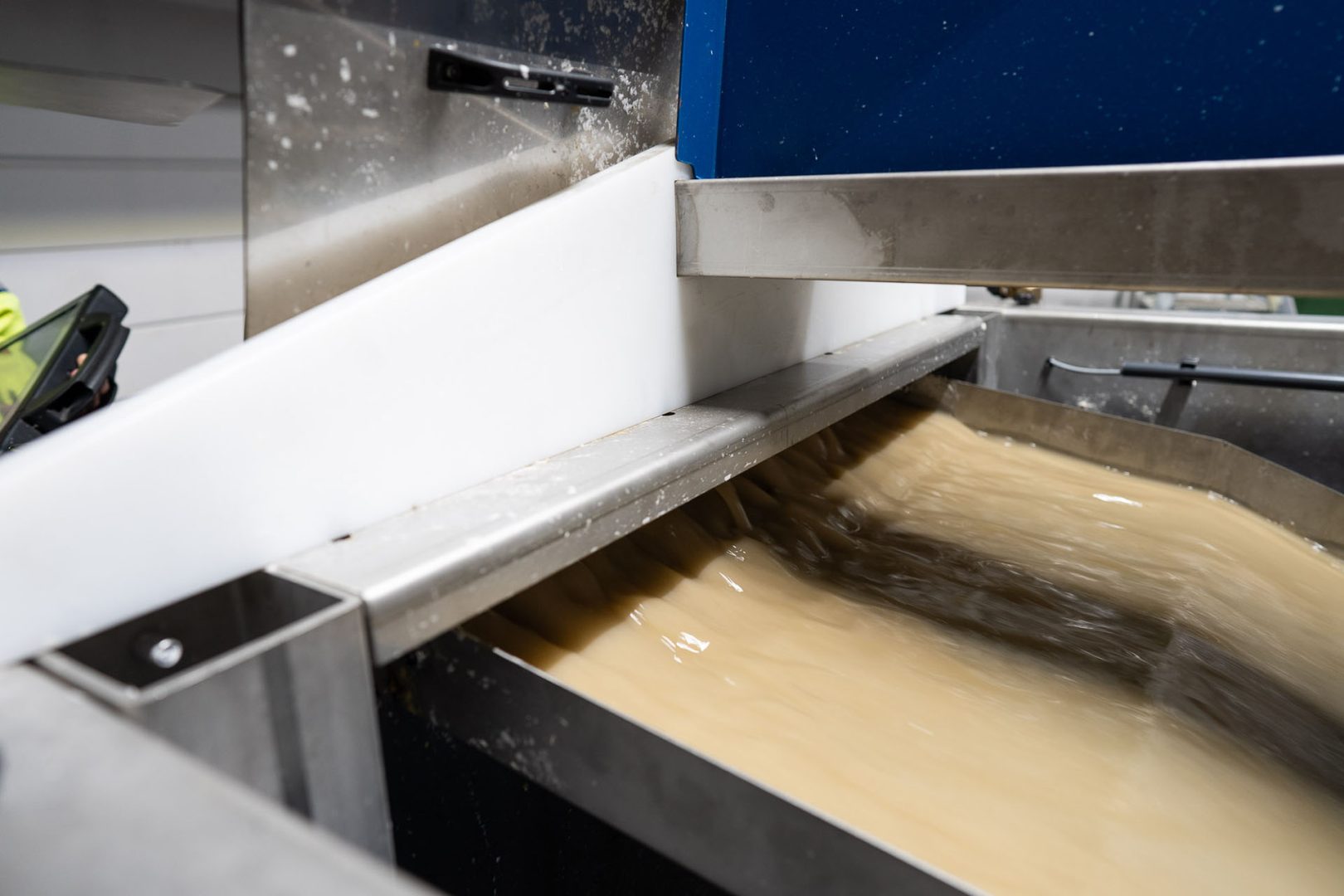
Bioforcence® oat husk cellulose entering the wire section.
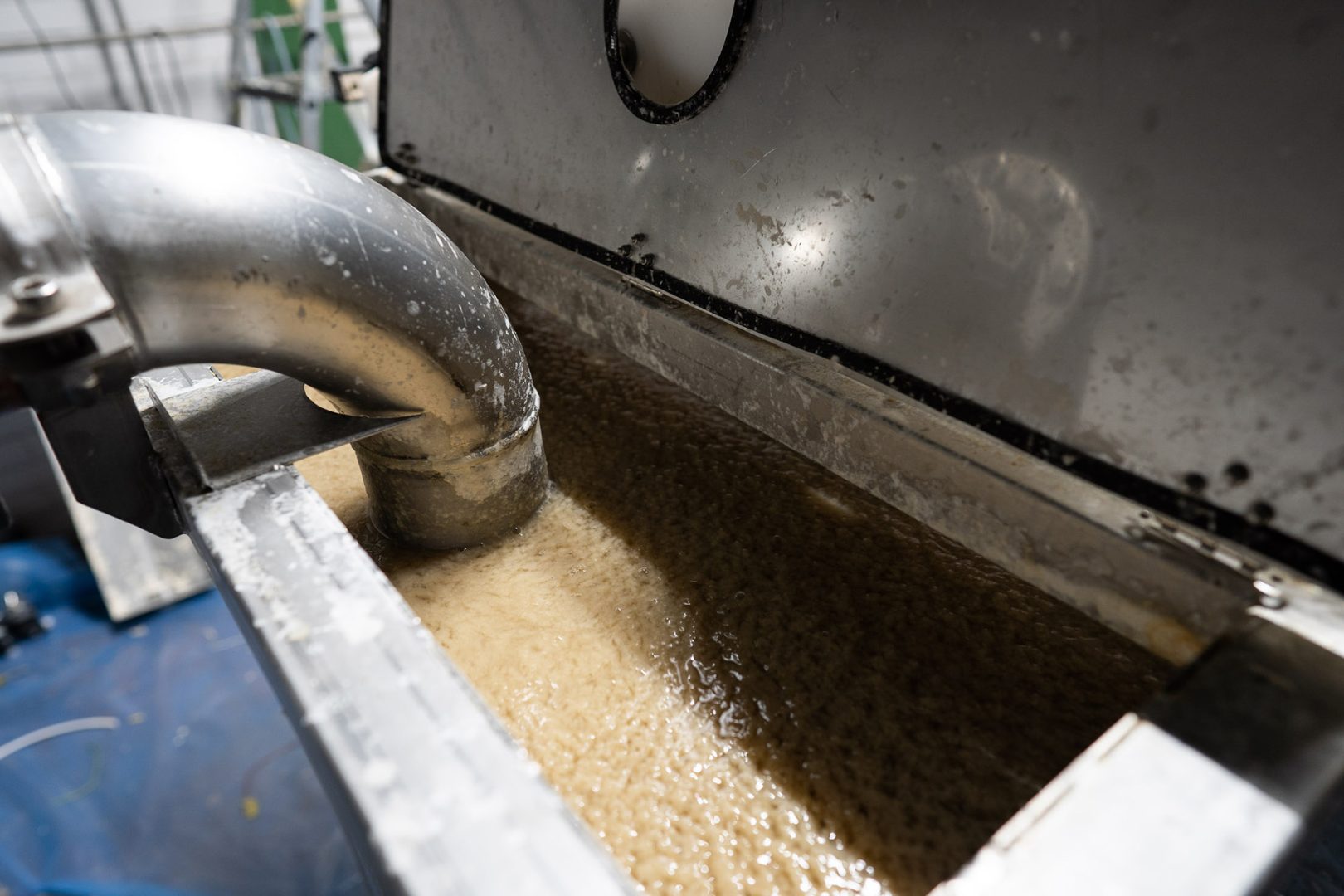
Oat husk cellulose being fed into the headbox.
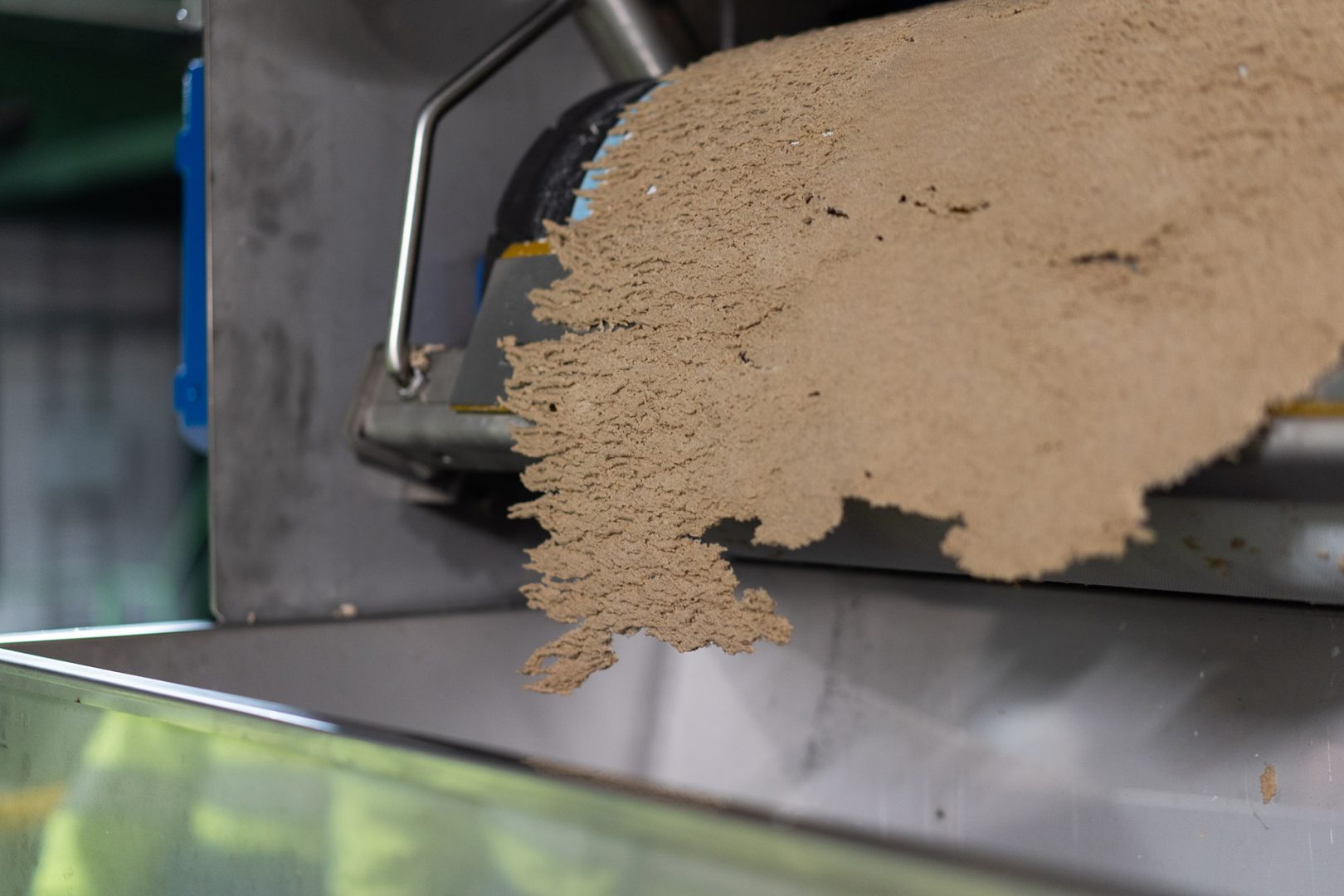
Unbleached cellulose ready for bleaching.
Oat hull have many uses
CH-Bioforce’s pilot plant uses oat hulls as its biomass, since they are produced year-round as a byproduct of the domestic food industry. This means the raw material doesn’t need to be shipped from the other side of the world, and biomass that would otherwise often go to waste gets put to good use. In a batch reactor, hemicellulose fibers are separated from oat hulls and used in products like adhesives, dietary fibers, and cosmetics.
Cellulose can be further refined into microcrystalline cellulose, which is also a valuable raw material for the cosmetics industry as well as the viscose industry, among others. Microcrystalline cellulose is also used to make transparent films and cellophane. The process also separates lignin from oat hulls. Lignin is used in industrial glues, hair care products and sunscreens, as it filters both UVA and UVB radiation.
A strong belief in the circular economy
The three founders of CH-Bioforce have been driven by more than just a desire to add value to the domestic forest industry – environmental reasons have played a key role too. They believe in the circular economy. And when agricultural byproducts are used as biomass, Finnish agriculture benefits as well, von Schoultz points out.
CH-Bioforce’s plants are also considerably smaller than traditional pulp industry plants, which are often so massive they can destroy local habitats. “Small plants can easily be set up wherever raw materials are available. That way habitats are left intact and the biomass doesn’t need to travel far,” von Schoultz says.
He notes that wanting to make the world a better place is not enough on its own, but the business also has to make economic sense. “Demand for renewable biopolymers is enormous, and the market is growing fast. We firmly believe this technology will transform the world.”
Want to know more? Check out these articles:
Industrializing biomaterials: Five critical transitions in scale-up
The biomaterials sector has rarely been better positioned. Despite economic recession, investment plans flourish, policy frameworks are strengthening, and the pipeline of promising technologies has never been deeper. Still, moving toward a commercial facility remains difficult, and the challenges are often unexpected. In this article, biomaterials experts Tuija Vartia and Jarno Peltonen discuss why biomaterial innovations often fail to scale from laboratory to industrial production.
Breaking barriers to global growth: Insights from Business Finland collaboration
Expanding internationally takes more than funding. Business Finland, Finland’s innovation and trade promotion agency, helps Finnish companies access networks and insights that accelerate global growth. While funding plays a role, the real advantage lies in connections and strategic support that make international expansion achievable.
Join the Newsletter!
Subscribe to the newsletter and receive the latest updates from Top Engineer magazine – featuring expert interviews, inspiring case studies, and actionable insights from our top professionals.
As a subscriber, you’ll enjoy:
- Innovative Ideas: Stay inspired by the latest breakthroughs and creative solutions in engineering.
- Sustainability Simplified: Discover practical strategies to accelerate the green transition.
- Cross-Industry Insights: Learn from success stories and best practices across the tech world.
Delivered six times a year, our newsletter is your key to staying informed, inspired, and ahead in the fast-evolving world of engineering.
Don’t miss out – sign up today!