
Fatigue Analysis
Maximize service life and reliability through comprehensive fatigue assessment.
Fatigue analysis evaluates structural durability under cyclic loading throughout the intended service life. Using advanced FEM tools, we assess stress concentrations, crack initiation sites, and propagation paths to optimize designs for maximum fatigue resistance. Fatigue analysis can reduce the need for maintenance and ensure the structural safety of the structure for the full life time.
One approach is to combine computational analysis with field measurements to capture realistic loading conditions. Dynamic simulations of work cycles provide accurate fatigue load inputs, while strain gauge data validates and refines our models. This integrated methodology ensures reliable predictions and optimal designs.
With particular expertise in welded structures, we help clients meet classification society requirements and international standards. We also provide training to help your team integrate fatigue considerations throughout the design process.
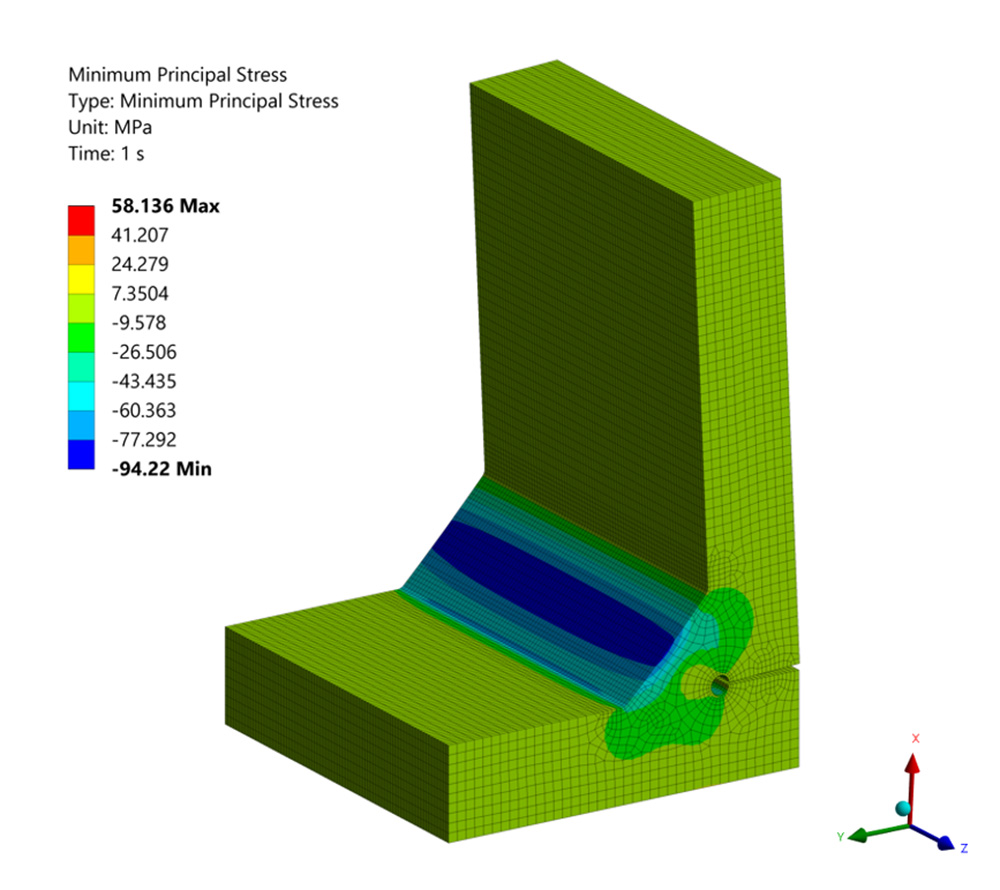
Fatigue Standards
- EN 1993-1-9 (Eurocode 3)
- IIW Recommendations
- DNV-RP-C203
- DVS 1612
- DVS 1608
- FKM Guideline
- EN 13001-3-1
Services and expertise
- High-cycle and low-cycle fatigue
- Welded joint assessment
- Crack propagation analysis
- Load spectrum development
- Strain gauge planning and analysis
Contact us

Do you want to know more?
Rotating Machinery
Our rotating machinery expertise covers turbines, generators, motors, fans, and pumps across marine, power generation, and industrial applications. We excel in rotor dynamics, high-temperature analysis, and specialized material applications for both new designs and modernization projects.
Cranes, lifting and transportation equipment
We offer comprehensive structural analysis services for crane and lifting equipment manufacturers. Our industry expertise covers various crane types, such as mobile cranes, overhead cranes, container handling cranes and mobile elevating work platforms (MEWPs), as well as offshore cranes.
Piping, Steel Structures, and Pressure Equipment
We deliver complete structural, vibration, seismic, fatigue, and thermal analyses for process and energy industry applications. Our expertise covers steel structures, pressure vessels, and piping systems to all major international standards, including specialized nuclear industry requirements. We also perform seismic qualification according to different standards.