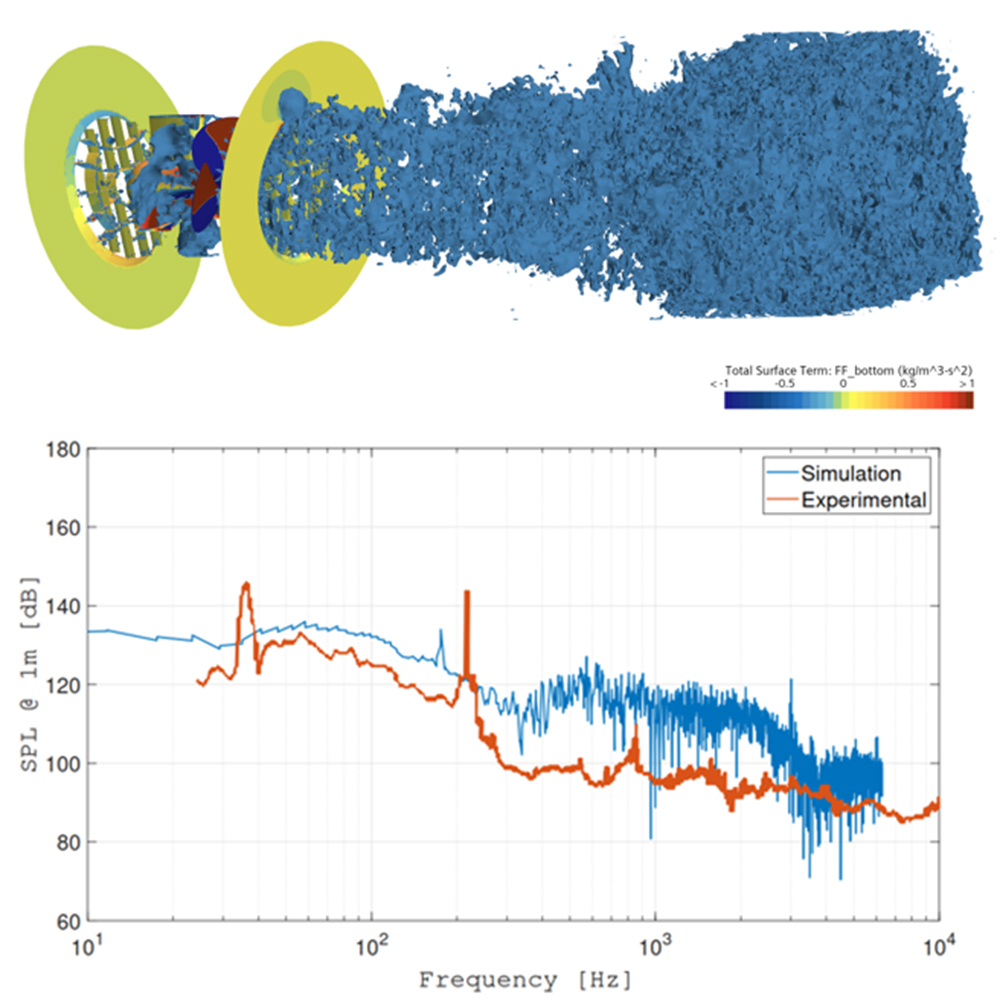
Noise modeling helps mitigate noise effectively already in the design phase. Through visualization, noise propagation can be illustrated and the effects of different solution alternatives can be compared before implementation.
In noise modeling, sound and noise generated by various sources are simulated. Noise modeling can be performed for individual equipment, larger areas such as plant sites, or underwater environments. Additionally, we can conduct measurements to verify noise modeling results.
The results of noise and vibration measurements can be visualized in an illustrative format using graphical distributions. Measurement and simulation results can be compared before and after noise mitigation measures, both indoors and outdoors.
In equipment, noise is often formed by the combined effect of multiple phenomena. Through modeling, sounds generated by noise sources can be identified at the drawing board and addressed at an early stage to achieve the best possible design.
The figure illustrates bow thruster noise prediction: colored surfaces indicate sound sources, while the blue area depicts pressure pulses in water. The graph presents sound intensity as a function of frequency. Underwater noise is an increasingly important design consideration as IMO regulations become more stringent and access to certain marine areas is restricted for vessels exceeding noise limits. Predicting underwater noise during the design phase enables targeted design modifications to ensure regulatory compliance and environmentally responsible operation.
CFD, or Computational Fluid Dynamics, is a method that is often utilized only for the post-design phase, although it is very well suited for wider and efficient use throughout the design process. Optimal use of CFD analysis generally shortens projects’ lead times and improves product assessment. It also provides an excellent basis for preparing digital twins. In process modeling tasks, CFD is an excellent tool for studying the components, for example.
Not only colorful pictures – CFD saves time and money
Did you know that by using computational fluid dynamics (CFD) you can save as much as 80 % in design time and 60 % in design costs? During the past 20 years, I’ve been lucky enough to participate in many interesting simulation projects both in Finland and abroad and have seen how clients have received instant help. But what is CFD really? Where can it be applied and why should it be utilized?
We have offices and representatives in Europe, Asia and the Americas. Our main offices are located in Finland and The Netherlands. Contact details of all our offices and representatives can be foundhere.