
Piping, Steel Structures, and Pressure Equipment
Ensure safety and compliance with comprehensive analysis for critical industrial infrastructure.
We deliver complete structural, vibration, seismic, fatigue, and thermal analyses for process and energy industry applications. Our expertise covers steel structures, pressure vessels, and piping systems to all major international standards, including specialized nuclear industry requirements. We also perform seismic qualification according to different standards.
When design parameters exceed standard code calculations, we apply advanced FE analysis to validate performance. Typical applications include boilers, reactors, storage tanks, heat exchangers, and industrial fans. Our analyses ensure operational safety, regulatory compliance, and competitive advantage through optimized design.
We maintain current expertise in EN, ASME, UBC, ASCE, STUK, and YVL standards, ensuring your equipment meets all applicable codes and regulations.
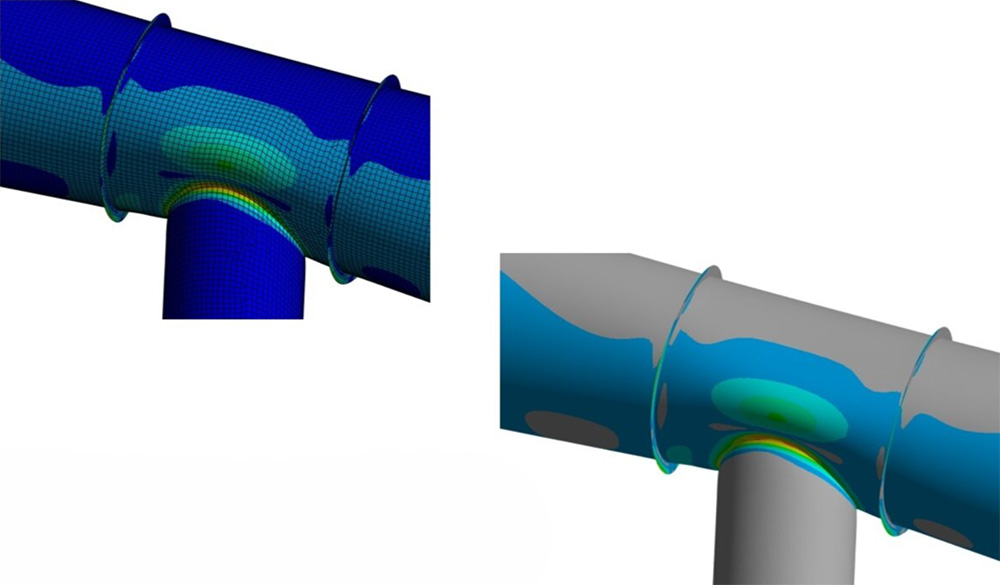
Non-linear analysis taking into account large deformation for a pipe. The model includes imperfections and material nonlinearity (GMNIA).
Services and expertise
- Power generation facilities
- District heating systems
- Pharmaceutical plants
- Chemical processing equipment
- Oil and gas infrastructure
- Seismic qualification
Contact us

Do you want to know more?
Seismic Analysis
Seismic analysis is critical for structures in earthquake-prone regions. Using response spectrum and time-history methods, we model structural behavior under various seismic scenarios, accounting for dynamic forces and damping to identify vulnerabilities and prevent catastrophic failure.
Nuclear Power
Nuclear projects demand the highest standards of analysis and documentation. We support both smaller research and development projects and system qualification, meeting stringent regulatory requirements with comprehensive, traceable documentation that satisfies both clients and authorities.