
”
In energy markets, resilience means diversity
Robin Norrbäck
Robin Norrbäck spends his days figuring out which energy projects are built to survive market swings and which ones will stall. He focuses on green mergers and acquisitions and renewable energy project development at Elron, an energy finance company within Elomatic. We asked him how companies can build resilience in a shifting energy market.
How did you experience Elron joining Elomatic a few years ago?
Joining a larger organization felt good as it opened the door to new projects. On a larger scale, commercial and technical expertise increasingly overlap in energy projects. Elron itself shifted from a purely commercial finance player to one with strong technical support, which now enables broader, more complex projects.
The bigger company also brought new structures, like leadership training and marketing support for events, plus many more colleagues. And yet Elron’s flexibility remained intact.
What originally drew you to the energy business and investment world?
I studied industrial engineering and management at Aalto University and wanted to combine strategy, finance, and technical knowledge. The energy sector felt like the right fit: a lot happens in this field, and the green transition is a critical driver for tackling climate change.
VTT estimates that using carbon dioxide could add more than 8 billion euros to Finland’s GDP by 2040.
What will give countries a competitive edge in renewable energy?
Take Finland as an example: we have the conditions to succeed in a big way with renewable fuels. Also, we have a strong power grid, deep energy expertise, and plenty of renewable electricity production that can scale up much further.
Finland also has a relatively large supply of biogenic carbon dioxide that comes from sources like forest industry byproducts and biofuel power plants. It’s becoming a valuable raw material, and companies are starting to compete for it, since it’s needed to turn hydrogen into renewable fuels. VTT estimates that using carbon dioxide could add more than 8 billion euros to Finland’s GDP by 2040. That gives Finland a real chance to become the future Norway of renewable fuels.
Why is carbon capture important?
First, carbon capture has an environmental aspect as it keeps carbon dioxide out of the atmosphere. If it’s used later instead, it can replace fossil emissions. Also, it enables further hydrogen processing. Hydrogen can be produced from water and renewable electricity, both of which Finland has. Combined with captured carbon dioxide, hydrogen can be refined into higher-value products like e-methane or e-methanol. That keeps the added value in Finland instead of exporting it elsewhere.
From a global perspective, locally produced renewable fuels can replace oil and reduce dependence on it. Financing requires good offtake agreements, something that still slows many projects down.
What role does project speed play in energy security?
Energy security comes from distributed production and flexibility on both the production and consumption sides. As energy demand grows, driven globally by AI and data centers, industrial applications, and renewable fuels, it’s important to advance production projects quickly across power grids worldwide. That’s what keeps supply and demand in balance. However, even more important than speed is the overall reliability of projects, including areas such as cybersecurity.
What does the energy market look like right now?
Globally speaking, when emissions drop in one region, it can lower commodity prices and push up demand elsewhere, in places that may not even track emissions. Right now, no one is optimizing the energy transition as a whole on a global level.
In Finland, few new investment decisions in electricity production have been made in recent years, creating a kind of chicken-and-egg problem between production and demand growth. The data center boom is now breaking that cycle: as demand rises, it opens room to grow production too. In wind power, for example, the project pipeline is about seven times the current capacity, leaving plenty of room to grow. At the same time, both production and consumption need more flexibility and adjustable capacity.
The best projects have clear documentation and solid contracts with equipment suppliers, contractors, and operating partners.
You’ve said that projects succeed when they’re easy to evaluate and finance. Why is that more important today?
Even with strong growth in consumption, not every project will get built. The best projects have clear documentation and solid contracts with equipment suppliers, contractors, and operating partners. Investors notice that, and it directly affects a project’s odds of getting built. These are also crucial factors in debt financing, as they help lower loan margins.
What separates a truly finished project from one that just looks finished?
What matters is having contracts in order with reliable partners and numbers that add up. Cash flows should be predictable decades ahead, using figures already fixed in the contracts, and the whole picture needs to stay profitable even under pessimistic assumptions. In short, project teams need to address risks before they arise.
In recent years, many wind projects were ready to build but never moved forward. Rising interest rates lowered the enterprise value of new wind farms, while inflation pushed total investment costs up. The premium between enterprise value and actual capex, which developers used to profit from, could even turn negative. The same pattern has shown up in the Baltics, Sweden, and Norway, where I’ve worked on projects. Since power prices are lower in the Nordics than in the Baltics, the Baltic market has felt the impact less.
With more technology options than ever, how should decisions be made when the future is uncertain?
Looking at single investments isn’t enough anymore. Decisions need a full picture of what will be competitive in the future. I like to approach it through scenario work: model several future scenarios, both technically and financially, and compare them. That gives leadership real insight into which direction to take the company.
For a district heating company facing a growing supply of waste heat, scenario work helps prioritize and price different waste-heat and production investments. That matters because parts of the district heating sector are reaching a point where even free waste heat may not serve the company’s interests.
If you had to name the biggest risk to a slowdown in the energy transition, what would it be?
At the EU level, the biggest risk is inconsistent policy. Energy investments are viewed over decades, so stable policy gives companies a clear outlook for the whole investment and operating period. If policy fails, future cash flows become uncertain and investments get harder, or stall altogether. In renewable fuels, for example, a large share of the final price comes from regulation, so clear rules are key to getting projects built.
Globally, the picture looks different. When Europe cuts coal and oil use, it can lower prices for those commodities and increase demand elsewhere. Some of those places don’t even track usage, and their pollution controls are weaker. Europe has seen examples of this too over the past decade. Finland shut down a coal plant with 90 percent efficiency around the same time Germany opened new coal capacity at about 50 percent efficiency.
How is the use of AI affecting the energy sector?
Of course, AI affects how we work and speeds up many tasks significantly. In the bigger picture, companies need to take data security very seriously. People must also stay in charge of decisions and oversee what AI does.
How do you build resilience in your own life outside work?
In energy markets, resilience means diversity, and I apply that same thinking to my own recovery. I spend time on sports, music, family, and friends, and I try to make room for myself too. I used to play a lot of saxophone, and after a long break, it’s about time I dug it back out.
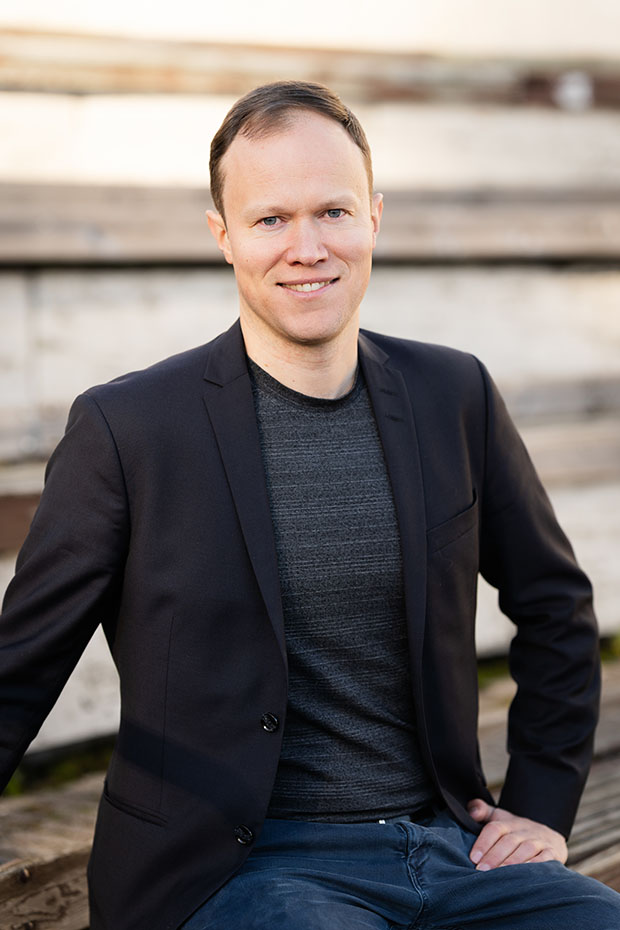
Robin Norrbäck
Age: 33
Lives in: Espoo, Finland
Education: M.Sc. (Tech.), Industrial Engineering and Management
Employment history: 8 years at Elron. Before Elron: various startups, strategy consulting, and investment banking internships
Hobbies: Sports and music
Want to know more?
A production strategy helps energy companies navigate the transition
Energy companies are making increasingly large investment decisions at a time when the number of options is greater than ever before. Evaluating individual investments in isolation is no longer enough. What’s needed is a comprehensive view of a future competitive energy production system. A production strategy combines technical and economic analysis across different energy production options.
Kokkolan Energia builds flexible and carbon-neutral energy production with electric boilers – Elomatic as design partner
Kokkolan Energia is investing in two 60-megawatt electric boilers and a 500 MWh thermal storage unit. The project significantly reduces the need for energy produced by combustion, brings stability to district heating prices, and strengthens the region’s industrial energy supply. Elomatic, involved since the preliminary design phase, is now responsible for the project’s detailed engineering.
Join the Newsletter!
Subscribe to the newsletter and receive the latest updates from Top Engineer magazine – featuring expert interviews, inspiring case studies, and actionable insights from our top professionals.
As a subscriber, you’ll enjoy:
- Innovative Ideas: Stay inspired by the latest breakthroughs and creative solutions in engineering.
- Sustainability Simplified: Discover practical strategies to accelerate the green transition.
- Cross-Industry Insights: Learn from success stories and best practices across the tech world.
Delivered six times a year, our newsletter is your key to staying informed, inspired, and ahead in the fast-evolving world of engineering.
Don’t miss out – sign up today!