
How to build Resilience into industrial projects
from day one
Estimated reading time: 7 minutes
Industrial resilience means being ready for very different kinds of disruptions. Some hit fast, like an unexpected power outage, and recovery is usually straightforward. Others, like a pandemic, drag on, and it is hard to predict how the situation will unfold. In those cases, flexibility and people’s skills become the deciding factors.
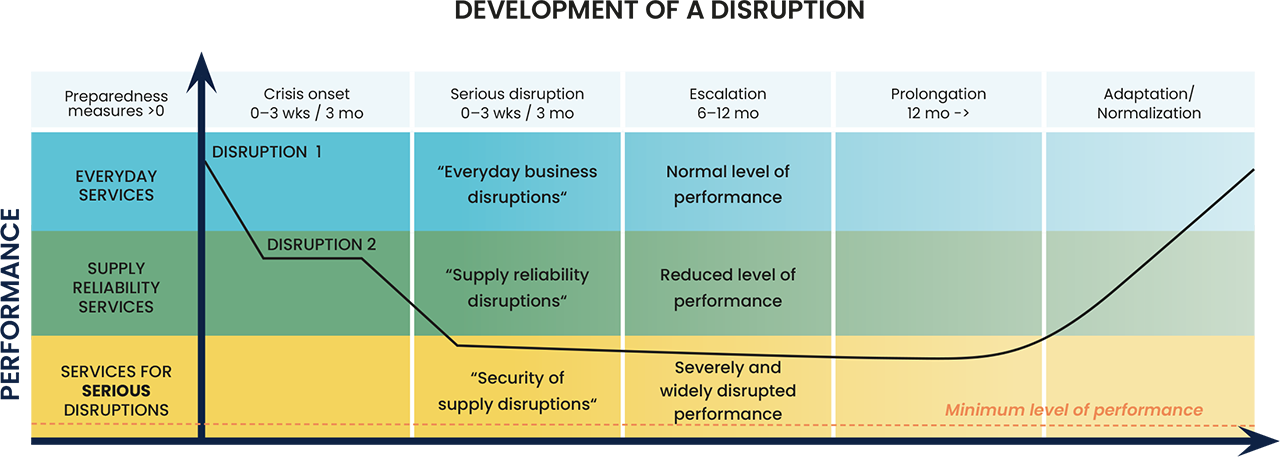
At the societal level, we can examine how a disruption develops through its possible phases. First, some kind of crisis emerges, which may not yet show much in everyday services. In the next phase, the crisis may become more severe. Supply disruptions then start to occur because production and logistics chains no longer function efficiently enough. The phase after that may be escalation, where we are already talking about disruptions to security of supply. In practice, this means strong measures by the government.
Another key production factor is reliable data communication and cybersecurity.
Staying above the minimum level
A crisis may also become prolonged. In that case, production operators are typically able to adapt their operations. The situation at the societal level may then start to improve, even if the crisis itself is not over yet. Every crisis ends at some point, and recovery toward a new normal begins. Not every crisis goes through these phases. What is central to resilience, however, is that performance never drops below the minimum level at any phase. In many cases, falling below that level means a collapse in the ability to function.
When designing a new production facility, it is possible to include resilience capabilities in the plans very extensively. This enables better and, above all, faster recovery from crises. We can divide the tools and methods for increasing resilience capability according to the time scale of the crisis.
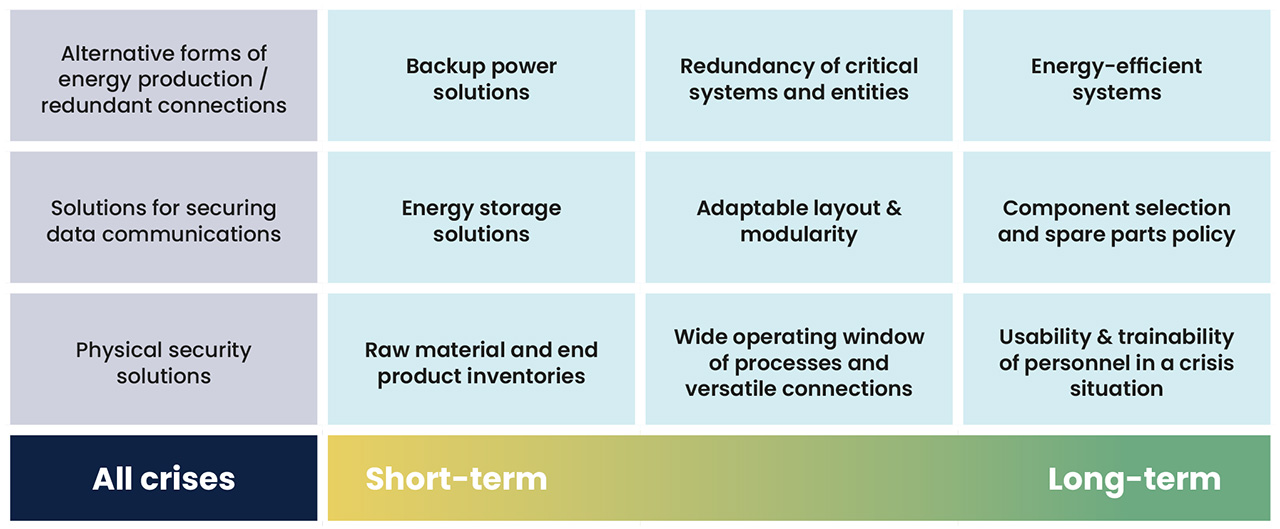
Tools and methods for increasing resilience in industrial projects
Energy and data communication are key in every crisis
Energy availability is one of the key capabilities that society revolves around. When planning a new production facility, it is important to look at which forms of energy it uses and whether it can switch between them if needed. For example, if the municipal district heating supply is cut off, an electric boiler could produce the necessary heat.
Connections can also be duplicated, so the facility could receive the minimum power that production requires through two different supply routes. That way, storm damage in one area would not necessarily leave the facility without electricity.
Another key production factor is reliable data communication and cybersecurity. No modern production facility can run without them, so keeping both secure and working is essential. In practice, duplicating data connections and using various UPS (uninterruptible power supply) systems can help with this.
Physical security
Physical security has become increasingly important in recent years, and area security solutions have developed a lot during that time. AI-based camera and motion detection technologies make it possible to build a complete picture of the situation during a disruption. They also offer many benefits for improving normal operations.
When designing a new production facility, it is also worth considering the need for physical shelters. These protect either personnel or critical infrastructure on the factory site (e.g., main transformers).
Preparing for short-term disruptions
Energy availability is also key in short-term crises. Backup power is one answer. It is typically sized to cover short power outages in the core process. At minimum, it should cover a controlled shutdown that brings the process to a safe state. Energy storage can also help with short disruptions. For example, a heat accumulator (water/steam) can keep the process running even if the main heat source is out of use for a short time.
Physical storage capacity is a key building block of resilience. Both the raw material and end product sides should have enough space and facilities to keep production running during, for example, a short logistics disruption. In general, duplicating critical systems helps a facility get through short disruptions. In practice, duplicating everything is not cost-effective, so the needs must be based on risk assessment.
A factory layout that is easy to modify, possibly with space reserved for future changes.
Tools for prolonged crises
When responding to prolonged crises or disruptions, the mindset shifts slightly from short-term crises. Operating during longer disruptions is more or less about survival, and many things and functions will likely have to be scaled back. What matters, however, is that operations continue as well as possible. This makes the adaptability of facilities and process connections extremely important.
In practice, this means a factory layout that is easy to modify, possibly with space reserved for future changes. It also means flexible process connections that allow the process to run across a wide operating window and at low loads. Energy efficiency plays an important role too. In a prolonged crisis, energy availability may be limited, or energy prices may be high at times.
When the crisis drags on even longer
If a crisis or disruption lasts a very long time, staff turnover may occur. The facility may also need to rely on people with no previous experience in similar industrial work. Easy-to-use processes and fast staff training then become key factors. For example, service and maintenance work must be well documented, as must the models for running production. Designers can address these needs already at the design stage. If needed, they can also develop entirely new applications that make it easier to absorb new information.
A long disruption also typically creates bottlenecks in logistics, and delivery times for certain components may start to stretch. At the design stage, it is important to use components that are as standard as possible. This allows the same spare parts to be used in as many places as possible.
Long-term solutions
There is one more type of crisis or disruption that people often forget: slowly developing crises. One example is climate change, which appears to be progressing inevitably, and we increasingly have to start adapting to it. This also affects industrial investments. In the future, for example, the impact of increased heavy rainfall will have to be taken into account.
On the other hand, summer heat also challenges industrial work, which increases the need for various cooling solutions. Overall, this may also mean rethinking the location of the entire factory so that production conditions do not become unbearable in the future.
Resilience starts at the design stage
The design phase of an industrial facility is the right time to build its resilience capabilities. At this stage, many solutions can also be implemented cost-effectively. During the investment phase, it is not enough to look only at the upfront investment cost. It is just as important to consider the costs of running the facility. When the whole is designed well, resilience measures bring benefits during normal production as well. This, in turn, shows up as lower operating costs.
Resilience can also be seen as part of corporate sustainability. Securing operating conditions in challenging and uncertain times also supports other areas of sustainability.
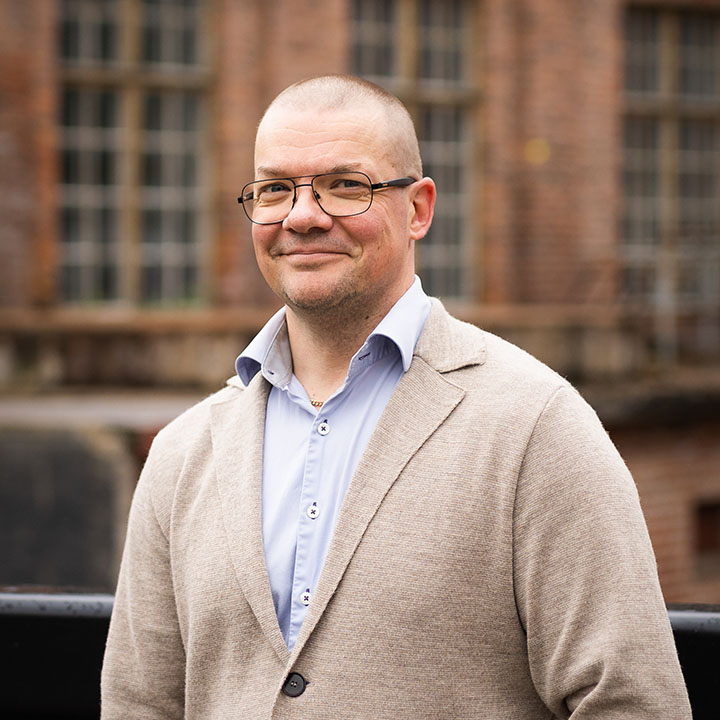
Teemu Turunen
Phil. Lic. (Env. Science)

Teemu has extensive experience in energy and process consulting across several industries. He currently serves as Business Development Director in the Industry business unit, focusing on leading the development of sustainable solutions to meet future needs.
teemu.turunen@elomatic.com
Sources
- National Emergency Supply Agency. (2026, April 28). Suomeen kohdistuva sotilaallinen voimankäyttö ja huoltovarmuus -skenaario [Military use of force against Finland and security of supply: A scenario].
Read more
How should industry’s resilience be developed and maintained?
As the operating environment of industrial companies becomes more uncertain and threats more diverse, preparedness for crises and other threats becomes increasingly important. Sustainable industrial operations require proactive planning, where risks are identified and prepared for effectively. Resilient operations withstand unexpected challenges and recover rapidly from crises.
Safety & Security
In the defense and security sector, our expertise covers both defense technology and its production design, as well as expertise in the development of comprehensive security and preparedness. Our long history in various industrial sectors forms the basis for our expertise – in land, on sea and in the air.