
From customer need
to tank tests: developing an Offshore
wind
foundation any shipyard can build
Estimated reading time: 7 minutes
Elomatic’s Float Foundation is a gravity-based foundation for offshore wind turbines, which is floated to its site and anchored to the seabed without pile driving. It consists of steel sections built with typical shipbuilding methods and no specialized tools. Simulation and a multidisciplinary team took the concept from a customer need to scale model tests in a towing tank.
Offshore wind farms typically need dozens of foundations at a time, so fabrication capacity matters. With Float Foundation, several fabricators in different parts of the world can build the sections. A shipyard then assembles them into complete foundations in its drydock or at the quayside. This gives the project better control over production and schedule and reduces risk.
Reaching this point took more than a good idea. The path to scale model tests in the Otaniemi Towing Tank shows how simulation and multidisciplinary collaboration move an innovation toward a full-scale offshore wind farm.
A concrete customer need sparked the idea
The development of a major innovation begins with an idea and early-stage concept development. The journey involves several stages. Development of Float Foundation started in 2020 in response to a concrete customer need, and the first ideas for the wind turbine foundation solution emerged the following year.
One of the developers of Float Foundation is Johanna Sjölund, Manager (FEM) at Elomatic, who joined the project as a structural analyst. She has been involved in developing the gravity-based floating wind turbine foundation from concept through to model testing.
“For an idea to progress, it must be technically interesting, but also feasible,” says Sjölund.
Team diversity is the key success factor
According to Sjölund, the most important success factor is a diverse team combined with open-minded ideation. Dozens of specialists have contributed to the development of Float Foundation, including mechanical and process engineers, CFD specialists, structural analysts, offshore experts, and financial professionals.
“The expertise of a large group must be combined into a coherent and effective whole. A culture where people build on each other’s ideas rather than dismissing them immediately is essential for success,” notes Sjölund.
Simulation can be utilized at an early stage to identify risks before a solution is taken into practical trials.
Simulation is the backbone of innovation
Sjölund relies on simulation to move the Float Foundation project forward quickly. It enables rapid iteration without the need for costly physical testing. Simulation can be utilized at an early stage to identify risks before a solution is taken into practical trials.
“The performance of Float Foundation was verified through extensive simulation before a single physical prototype had been built. The initial studies were high-level in nature and focused on establishing whether the concept would work at all. More loads and greater levels of detail were then gradually added to the model,” Sjölund explains.
CFD and FEM help ensure success
For Elomatic, Computational Fluid Dynamics (CFD) and Finite Element Method (FEM) analyses are key engineering tools. The company has extensive experience in carrying out similar simulations across a wide range of sectors, from the energy and process industries to pharmaceuticals.
Elomatic’s modeling services cover everything from verifying flow performance to optimizing equipment for real operating conditions. The company has completed thousands of structural analysis projects including vibration, fatigue, and thermal analyses, as well as nonlinear and time-dependent simulations. At its best, simulations can reduce design time and costs, cut reliance on physical prototypes for validation, or eliminate the need for a prototype completely.
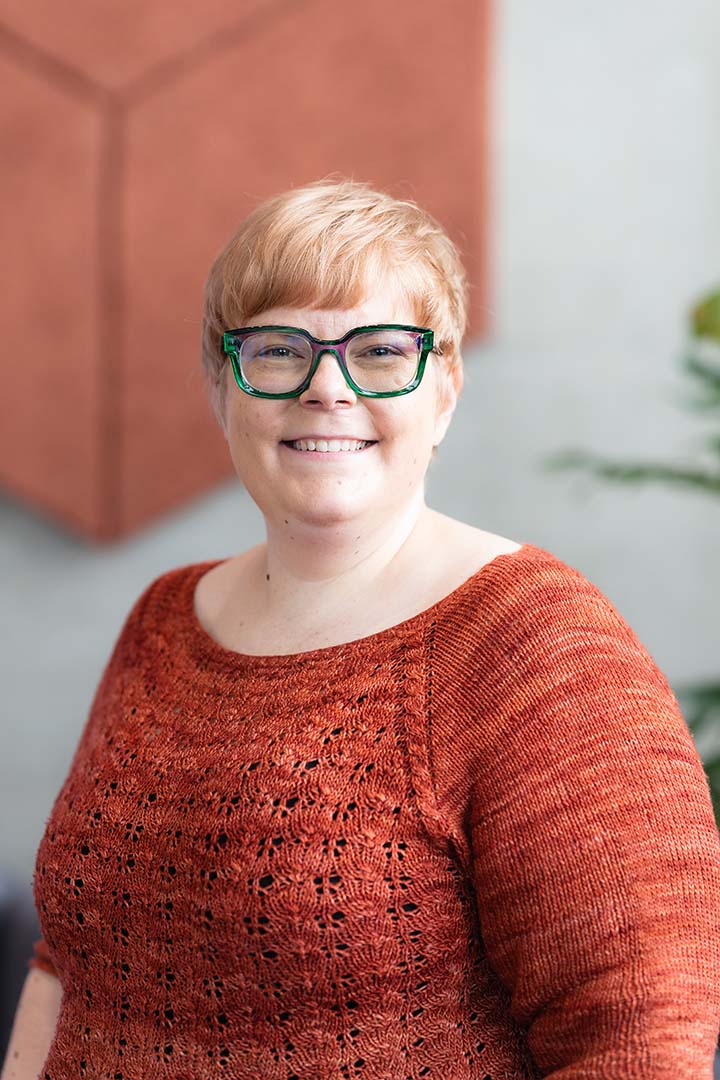
Johanna Sjölund, Manager (FEM), is responsible for the structural analysis work for the Float Foundation development project.
Scale model testing brings the concept closer to reality
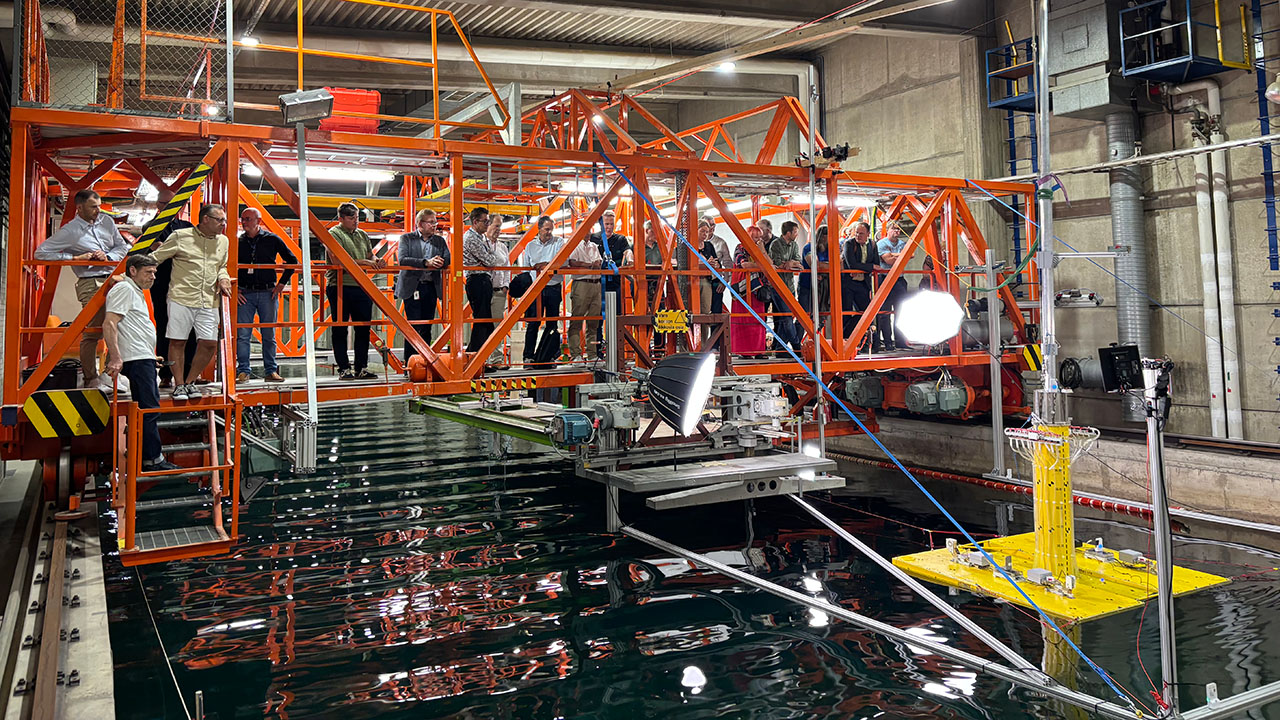
Scale model testing provides tangible confirmation that the concept also works in practice, albeit on a smaller scale. In the case of Float Foundation, the final stage involved testing physical scale models in the Otaniemi Towing Tank, where waves and wind can be generated under controlled conditions. The classification society DNV was involved in the development process, as independent organizations play an important role in building confidence in new solutions.
The trials examined, among other things, the structure’s ability to remain upright under wind loading, its installation by flotation, and its anchoring performance in different seabed materials, including fine sand and clay.
Scale model testing provides tangible confirmation that the concept also works in practice, albeit on a smaller scale.
Building the first prototype together with customers
According to Sjölund, the next step is to build the first prototype, preferably in collaboration with customers. This will be followed by pilot projects before the solution can be scaled up to full size.
“In offshore wind farms, we are typically talking about dozens of turbines at a time, so confidence in the solution must be high before major investments are made,” Sjölund notes.
“Interested customers also help us. Their questions have already revealed perspectives that the internal team might not necessarily have identified on its own, such as offshore biodiversity testing,” adds Sjölund.
Managing the unexpected
The greatest risk, says Sjölund, is what nobody has foreseen. Broad expertise and simulation-based testing help catch problems early, while classification society standards remove much of the known risk. Even so, managing combined loads like wind, waves, mooring, soil and ice remains demanding. On the practical side, the modular structure reduces project risk. Because several fabricators can share the work, the project does not depend on the capacity of a single yard.
Open dialogue matters, too. “People should feel free to question a colleague’s solution. Questions work best when asked out of curiosity rather than as a challenge. That keeps the discussion constructive,” Sjölund says.
Want to know more? Check out these articles:
Float Foundation: Offshore Wind Foundation Without Installation Vessels
Float Foundation: offshore wind foundation built onshore, towed to site, no installation vessels needed. Suitable for 2-50m depth.
Visionary – Tero-Seppo Tuomela
Tero-Seppo Tuomela, Senior Vice President at Elomatic, has spent over two decades at the company. Today, his primary focus is making innovation happen systematically, not by chance. In a time of compounding disruptions, he sees systematic innovation management more urgent than ever.
Join the Newsletter!
Subscribe to the newsletter and receive the latest updates from Top Engineer magazine – featuring expert interviews, inspiring case studies, and actionable insights from our top professionals.
As a subscriber, you’ll enjoy:
- Innovative Ideas: Stay inspired by the latest breakthroughs and creative solutions in engineering.
- Sustainability Simplified: Discover practical strategies to accelerate the green transition.
- Cross-Industry Insights: Learn from success stories and best practices across the tech world.
Delivered six times a year, our newsletter is your key to staying informed, inspired, and ahead in the fast-evolving world of engineering.
Don’t miss out – sign up today!